Under The Skin
Cast:
Scarlett Johannson
Writer/Director: Jonathan Glazer
107 mins
Writer/Director: Jonathan Glazer
107 mins
Generating such a mixed response, veering from adulation to apathy is no mean feat with a cinema feature, but Jonathan Glazer’s Under the Skin seems to have managed to straddle just such a creative bridge across contemporary tastes.
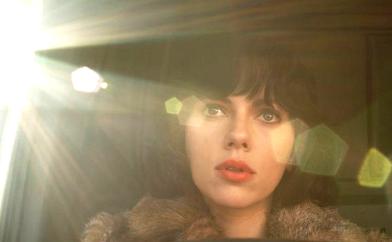
This tells the story of a shape-shifting alien who sets out across Scotland with particular emphasis on Glasgow (this reviewer’s home town), in the form of Scarlett Johansson, as she seduces and abducts some average lowlife and hapless local humans. At times it’s a quite mesmerising nightmare, honed with a similarly sleek, disorienting overlay that Glazer put on his extraordinary debut Sexy Beast and subsequent Birth. This is another quite exemplary piece of work from him, proving he is without doubt a formidable cinematic talent.
Don’t expect any exposition here however. The film opens with a series of striking images: abstract shots of black goo filling up a vessel; a motorbike screaming down Scottish hillside roads, a woman de-robing a female corpse on a bright-white area - and later there is a devastatingly haunting scene on a turbulent coastal beach which may revisit your psyche some time after you've left your seat.
When the alien sets off on her mission, you have to deduce its contours whilst muffled conversations go on amongst Glazer’s stunning soundtrack – which is accented by an staggering, experimental score from Mica Levi. As she plausibly drives around Glasgow and the outskirts areas in a white van, she stops only to pleasantly speak to random men in an assured southern England accent. These scenes were shot with built-in hidden cameras of which the people encountered were entirely unaware, as were others in a shopping centre, and around the city. Following this are some extremely unsettling images, as we are finally made aware of her true intentions.
There’s one particular sequence that will
linger long in my memory, as she picks up a facially disfigured individual on
the road – and offers him some potential sexual release. The momentary insert
shot of him pinching himself is utterly heartbreaking in its poignancy.
As proceedings progress, human intuition begins to enter her consciousness, and the tone softly alters from nightmarish to poetic before concluding in a deeply upsetting conclusion, as the alien ultimately discovers just what extremes this (our) planet’s beings are capable of: astonishing beauty and abominable ugliness. Whilst most certainly not a film for all – Under The Skin sincerely wishes to show us something bold, new and amazing. It may well exist in another world, but it reveals so much about our own.
As proceedings progress, human intuition begins to enter her consciousness, and the tone softly alters from nightmarish to poetic before concluding in a deeply upsetting conclusion, as the alien ultimately discovers just what extremes this (our) planet’s beings are capable of: astonishing beauty and abominable ugliness. Whilst most certainly not a film for all – Under The Skin sincerely wishes to show us something bold, new and amazing. It may well exist in another world, but it reveals so much about our own.
LABOR DAY
Cast: Kate Winslet, Josh Brolin, Gatlin Griffith, Dylan Minnette,
Gattlin Griffith, Tom Lipinski, Tobey Maguire
Director: Jason Reitman
111 mins
On each of the five days of the long weekend during which time Frank remains out of view from possible passers-by, something unexpected happens. The scene when a neighbour's disabled boy is left with them, plays out as a wonderful surprise - with a sting in the tail. There is also a great section where a teenage girl from Chicago, who advises Henry that when people have sex, their brains are affected. This is especially relevant due to both Henry's parents individually having made gauche attempts to offer their already-aware son the awkward ‘birds and the bees’ conversation.
Inevitably a relationship develops between Adele and Frank - the nature of which rather than being revealed here, is best seen on screen. Occasional flashbacks showing Frank's past shed light on the unfortunate reasons for his subsequent incarceration, as are we shown Adele’s previous marriage which succinctly fills in the missing links.
The film's emotional arc rises and falls, and the sublime soundtrack informs the film's change in tone as ominous monotonic rhythms replace the melodic. Brolin has real presence and charisma to spare while Winslet is both beautifully understated and internal. It is not a glamourous role, yet Winslet's appeal shines through from the honesty in her eyes. Griffith is outstanding too - the strength of the emotions he conveys fills the screen, while Reitman directs his actors well and achieves a perfect tone. This is a film about delicate issues, which are sensitively handled. There is romance - but sentiment and schmaltz are thankfully absent. What were are given is an unusual relationship drama that teeters constantly on the edge of unpredictability but offers tension, humour and a huge sense of hope. As Frank observantly remarks, nothing misleads people like the truth.
Director: Jason Reitman
111 mins
A prison escapee, a depressed single mother and an impressionable
pubescent boy reach an emotional crossroads in this enthralling drama set over
the 1987 American Labor Day long weekend, with a key element being surprise.
Director Jason Reitman succeeds in taking a premise and enhancing it to such a
degree that the viewer totally empathises with all the characters, similar to
his previous outing Up in the Air. With ‘Labor Day’, Reitman's adaptation of a
novel by Joyce Maynard novel is airy and uncomplicated, without any distractions.
Kate Winslet, Josh Brolin and Gattlin Griffith each satisfactorily portray the
essence of their troubled characters with forthright integrity and conviction.
This is a quite disarming film that exposes the hunger and desire of love and
the subsequent rewards that patience and an open mind and heart can offer.
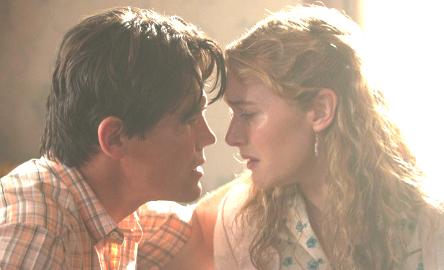
Whilst out on her monthly shopping trip, a nervous Adele (Winslet) accidentally tumbles upon an injured Frank (Brolin), who politely but firmly insists that she drives him back to her home. It is fairly clear that a desperate lacking exists in Adele's life, despite her son’s best efforts to fill the void. Renegade Frank, following an explanation of his circumstances - and for appearances - ties Adele's hands and feet to a chair, but it is the power of Rolfe Kent's superb lyrical music that suggests Frank intends to function with good grace as a helpful house guest, rather than as the brutal, convicted murderer the media portray him to be. He embarks upon ironing and car repairs, and informs Henry with tips on baseball techniques amongst other things. In so doing, he becomes the role model that Henry's remarried father (Clark Gregg) never was. There is a wonderful sequence where Frank instructs Adele and Henry on the ideal way to bake a peach pie – which is pivotal in that it is the first time they will create something together – and subsequently is quite tangible and symbolic. The sensuality of the hand-mixing of the fruit and pastry unsurprisingly brings consequences - for all three, as Frank's cooking instructions are suggestively loaded. As the pastry is rolled, it is raw and rough - not unlike the relationships at that moment. It is the turning point of the film.
Whilst out on her monthly shopping trip, a nervous Adele (Winslet) accidentally tumbles upon an injured Frank (Brolin), who politely but firmly insists that she drives him back to her home. It is fairly clear that a desperate lacking exists in Adele's life, despite her son’s best efforts to fill the void. Renegade Frank, following an explanation of his circumstances - and for appearances - ties Adele's hands and feet to a chair, but it is the power of Rolfe Kent's superb lyrical music that suggests Frank intends to function with good grace as a helpful house guest, rather than as the brutal, convicted murderer the media portray him to be. He embarks upon ironing and car repairs, and informs Henry with tips on baseball techniques amongst other things. In so doing, he becomes the role model that Henry's remarried father (Clark Gregg) never was. There is a wonderful sequence where Frank instructs Adele and Henry on the ideal way to bake a peach pie – which is pivotal in that it is the first time they will create something together – and subsequently is quite tangible and symbolic. The sensuality of the hand-mixing of the fruit and pastry unsurprisingly brings consequences - for all three, as Frank's cooking instructions are suggestively loaded. As the pastry is rolled, it is raw and rough - not unlike the relationships at that moment. It is the turning point of the film.
On each of the five days of the long weekend during which time Frank remains out of view from possible passers-by, something unexpected happens. The scene when a neighbour's disabled boy is left with them, plays out as a wonderful surprise - with a sting in the tail. There is also a great section where a teenage girl from Chicago, who advises Henry that when people have sex, their brains are affected. This is especially relevant due to both Henry's parents individually having made gauche attempts to offer their already-aware son the awkward ‘birds and the bees’ conversation.
Inevitably a relationship develops between Adele and Frank - the nature of which rather than being revealed here, is best seen on screen. Occasional flashbacks showing Frank's past shed light on the unfortunate reasons for his subsequent incarceration, as are we shown Adele’s previous marriage which succinctly fills in the missing links.
The film's emotional arc rises and falls, and the sublime soundtrack informs the film's change in tone as ominous monotonic rhythms replace the melodic. Brolin has real presence and charisma to spare while Winslet is both beautifully understated and internal. It is not a glamourous role, yet Winslet's appeal shines through from the honesty in her eyes. Griffith is outstanding too - the strength of the emotions he conveys fills the screen, while Reitman directs his actors well and achieves a perfect tone. This is a film about delicate issues, which are sensitively handled. There is romance - but sentiment and schmaltz are thankfully absent. What were are given is an unusual relationship drama that teeters constantly on the edge of unpredictability but offers tension, humour and a huge sense of hope. As Frank observantly remarks, nothing misleads people like the truth.

