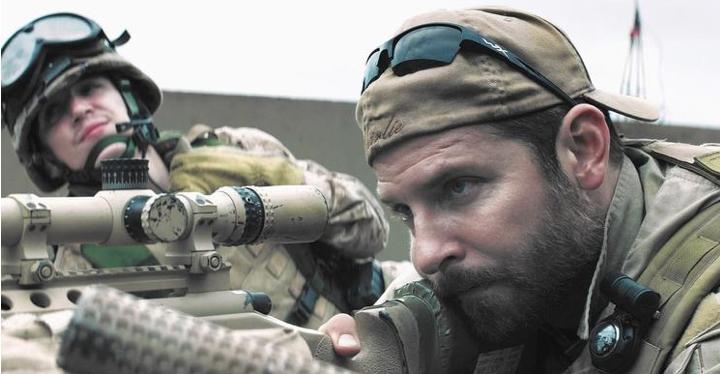
Cast Bradley Cooper, Sienna Miller, Luke Grimes, Jake McDorman, Brian Hallisay
Producer/Director: Clint Eastwood
134 min
Following the dismal “Jersey Boys”, many thought he might now be consigned to the dustbin of once relevant filmmakers - but Clint Eastwood comes roaring back with American Sniper, the true story of Chris Kyle, the most lethal combat marksman in American military history. Not since 2009 and Gran Torino has the octogenarian filmmaker been anywhere near the top of his game. In fact, since that film, his exponentially escalating slide has been nothing short of baffling but with American Sniper he is back, and though the film isn’t without its faults, it reminds us that his Clintness still has a few bullets left in the chamber. Bradley Cooper plays Kyle, who grew up in Texas before amassing a whopping 160 confirmed kills out of a potential 255 over four tours of duty in Iraq. Cooper perfectly captures the reckless bravado of the Texas cowboy, even managing to get the Texas accent right, based upon where his character grew up as the son of a church deacon who preached the three categories of people (sheep, wolves, and sheepdogs) and the importance of protecting loved ones. A trait that most certainly shaped his son’s extreme desire to help his fellow warriors at all costs.
As the film opens, Kyle is riding horses on the professional rodeo circuit and plowing through girlfriends before eventually marrying Taya (Sienna Miller), whom he meets in a bar. Prompted by the horrific events of the 9/11 attacks, Kyle joins the military and puts his keen shooting skills to use as a Navy SEAL sniper deployed to Iraq. Clearly not the type to talk openly about his feelings (these gung-ho types rarely are), Kyle’s marriage succumbs to the strain as he slowly becomes more detached with each subsequent tour. “I need you to be human again,” his wife tells him, aware of the futile hope that he won’t fall prey to the almost-inevitable post-trauma of the conflict’s horrific events.
Despite being slightly underdeveloped, the domestic scenes, in which Cooper manages to depict the horrific toll his time in country has taken (usually without even uttering a word), are interspersed throughout the fast-paced action sequences and provide a nice contrast as well as a much-needed moment to take a breath. Eastwood’s battle scenes are genuinely tense and thrilling, but thankfully never fall victim to the annoying jump-cut or shaky-camera technique so many filmmakers use these days. Eastwood is old-school and we should be grateful for his practicality here. The fog of war and life-and-death decisions the snipers face each day are ever-present and add a juicy moral grey area to chew on as we watch bodies tear apart and heads explode.
Jason Hall’s script, based on Kyle and co-author Scott McEwen’s book “American Sniper: The Autobiography of the Most Lethal Sniper in U.S. Military History”, works in a thread about Kyle’s Iraqi nemesis, a fellow sniper known as Mustafa, who picks off American soldiers while seeking the $80,000 bounty on Kyle’s head. Despite his fame and notoriety as an American hero, the real Chris Kyle is said to have a been a very unassuming and humble person. Cooper feels fully committed to his Kyle, and though not as meaty as some of his more recent outings, his performance here is unquestionably instrumental in aiding Eastwood’s re-emergence as a relevant director. The end result is a very strong film which carries a weighty emotional resonance whilst also touching on the real-world issues the western world faces as thousands of ex-military men and women return home from the horrors of war.
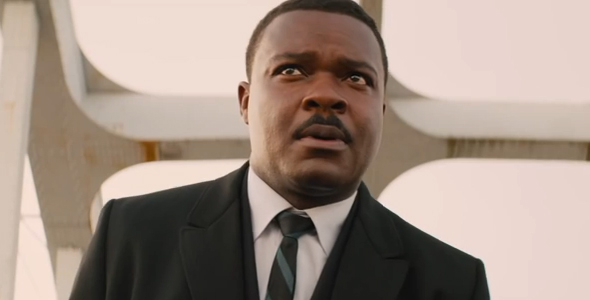
Director: Ava Duvernay
127 mins
In the present day emergence of the 24-hour news-cycle, it’s hard to keep the media attention focused where you want it. That was one crucial strategy utilised by Dr. Martin Luther King Jr. (a performance of sustained and dignified brilliance by David Oyelowo) against LBJ, a president reluctant to try to push the Voting Rights Act through. The script by Paul Webb was significantly rewritten by Duvernay, though she doesn’t receive an onscreen credit for some reason, begins with King receiving the Nobel Peace Prize in 1964, then meeting with a self-congratulatory Johnson (an excellent portrayal from Tom Wilkinson), still preening over passing civil-rights legislation earlier that year.
King, however, doesn’t want Johnson to rest on his laurels.
Instead, he wants the president to push to enact legislation creating the
specific right for minorities to vote. The legislation would bar poll taxes,
tests or any of the other obstacles to African-American suffrage that had stood
in parts of the South since the end of the Civil War. King and the leadership
of the Southern Christian Leadership Council decide that Alabama is the state
to make their stand and Selma is the city to make their point.
Just as Bull Connor in Birmingham had brought the spotlight to King’s non-violent protests with his vicious attacks with dogs and fire hoses, Selma’s sheriff, the horrendously insufferable Jim Clark, could be counted on to violently protect his racist views against King’s demonstrators. King goes to Selma for a protest, then announces a march for voting rights from Selma to Montgomery, the state capital. At which point, he’s opposed not only by Sheriff Clark but by snarling Alabama Gov. George Wallace (captured well by Tim Roth) and, to a lesser extent, LBJ himself, who hates the fact that King has taken control of the message, putting the screws to the president to act to prevent further violence.
Duvernay’s film captures the sense of danger at that moment.
The SCLC leaders engage in graveyard humour about Selma being “as good a place
to die as any,” jokes that anger Coretta King, played by Carmen Ejogo. But it
takes courage to move forward, given a recent history that included the bombing
of a Birmingham church that killed four little girls, the shooting of Medgar
Evers and the killing of four civil-rights workers in Mississippi. The threat
of racist violence is real and constant. Even as the black leaders are trying
to keep their movement together and maintain its peaceful approach, the angry
Johnson sets J. Edgar Hoover (Dylan Baker) on King and his wife, unleashing
secret recordings of King’s dalliances outside his marriage to Coretta. The
couple is under siege, regularly fielding phone calls that threaten their lives
and the lives of their children. Duvernay’s film is about courage and strength,
accurately enable by the towering performance of Oyelowo as King. She tells a
story about personal sacrifice in the name of the greater good, in the power of
a raised voice to effect change for the common welfare. It’s a reminder of an
era of activism when idealism could not be easily distracted, whether by social
media or media in general. “Selma” is an important film for exactly that reason.
