EXODUS: Gods and Kings
Cast:
Christian Bale, Joel Edgerton, Ben Kingsley, Aaron Paul, John Turturro,
Sigourney Weaver
Director: Ridley Scott
150 mins
Director: Ridley Scott
150 mins
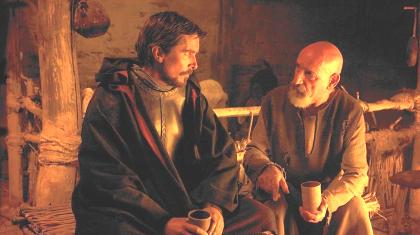
Christian Bale's Moses opens the film as a capable young man, a strategic adviser to the Pharaoh, the kind of hard nut who sorts out muggers and assassins without breaking sweat. However, as Exodus: Gods and Kings drags on, and as Moses is cast out by the evil Ramases (Joel Edgerton), Bale gets lost in the mix and his role varies so much that he seems to be playing a different character in every scene, with his accent adjusting towards whoever he's talking to at the time. Once Moses finally encounters God, who shows up as an 11-year-old boy with an impeccable Oxbridge dialect, Bale digs slightly more deeply into the role. He turns Moses into a muttering freak who seems to be crazy, which of course is right up Bale's alley. Unfortunately, God doesn’t show up until about half-way through the film.
With Exodus, Ridley Scott seems intent upon trying to produce an old-style Hollywood biblical epic. The acting ranges from occasionally acceptable (Bale) to I-just-showed-up-for-the-cash (Sigourney Weaver and Ben Kingsley) to woefully miscast (as with Aaron Paul who has almost no dialogue as Moses's sidekick, Joshua, presumably because every time he opens his mouth, he sounds like a drug dealer) to utterly ridiculous (John Turturro lisping and poncing his way along as Pharaoh Seti). The villain of the piece, Edgerton's Ramses, is a bald, inept buffoon who can't do one competent thing for the whole film. He seems quite at home waving a dead baby around as a prop and trying to emote with whatever winds up in his hands (dead baby or not). If Exodus was even a half-way decent film it would have more than 20 minutes from its two-and-a-half-hour running time where it almost comes alive. Towards the end, the plagues are rolled out in a very long montage of special effects. People catch fire, they're attacked by tiny animals, crocodiles behave like sharks, the Sea (appropriately) turns Red, a trillion locusts arrive in a blaze of glory, the locals’ faces erupt in boils, and civilisation starts to fall apart.
The sequence is in no way worth the price of admission, but it at least perks things up a bit and reminds us what the film could have been, if it had a pulse and a brain. The climactic parting of the Red Sea, though, is rubbish, as with a swift edit, it’s clear they’re all just strolling along the beach – and as a result is a total letdown. A monumental tstunami arrives and wipes out all the baddies, but hang about, Moses and Ramases emerge, slightly damp but none the worse for wear. What does it say about this feature when the dreaded ‘Noah’ is actually more impressive?!
WHIPLASH
Cast:
Miles Teller, J.K. Simmons, Paul Reiser
Writer/Director: Damien Chazelle
106 mins
Writer/Director: Damien Chazelle
106 mins
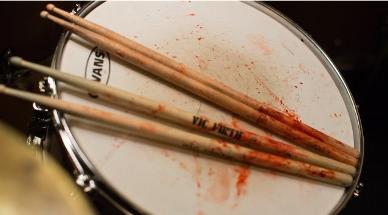
Featuring a remarkably hypnotic performance by J.K. Simmons, Whiplash follows aspiring drummer Andrew Neyman (Miles Teller) as he sets out to please a notoriously hard-as-nails instructor named Terence Fletcher (Simmons) - with the film detailing Terence's alternatingly paternal and antagonistic relationship with his would-be protégé. There's little doubt that the film fares best in its almost astonishingly engrossing opening hour, as filmmaker Damien Chazelle does a superb job of establishing the movie's evocative atmosphere and vivid characters - with Teller's above-average turn as the increasingly unhinged protagonist, for the most part, dwarfed by Simmons' commanding, awe-inspiring work here. Chazelle has infused the various encounters between Andrew and Terence with an energy that's nothing short of electrifying, and it's worth noting, too, that many of the characters' sessions possess more suspense than most contemporary thrillers. And although the setup seems to promise a very specific sort of story, Chazelle deserves credit for confounding the viewer's expectations at virtually every turn - with the narrative going in much darker directions than one might've initially expected.
It's disappointing to note, then, that Whiplash, once it passes a very specific point, begins to fizzle out to a fairly palpable degree, as Chazelle offers up a comparatively conventional third act that's almost entirely lacking the first half's edge-of-the-seat tension - with the separation of Teller and Simmons' respective characters wreaking havoc on the film's late-in-the-game momentum. Whiplash's few problems are ultimately rendered moot by Simmons' pervasively captivating performance, and it's not a stretch to label the role of Terence Fletcher the high-water mark of the actor's eclectic filmography.
Big Eyes

Cast: Christoph Waltz, Amy Adams. Terence Stamp
Director: Tim Burton
96 mins
Director: Tim Burton
96 mins
In recent years, Tim Burton’s name has become synonymous with self-plagiarism, creative bankruptcy, black-and-white stripes and Johnny Depp‘s theatrical eyelash-batting. However this - the warm and gorgeous Big Eyes, his first live-action feature without Depp in more than a decade, is his most human film since Ed Wood. This biopic of kitsch painter Margaret Keane (Amy Adams) marks a significant artistic growth.
Margaret’s struggle to gain recognition as the creator of her work after her charming-sociopath husband Walter (Christoph Waltz) passes them off as his own for years is a tale about quavering protagonists who finally stand up to their bullies. But Margaret’s timidity finds greater resonance because she’s not just another one of Burton’s shrinking violets; instead, she’s a budding bloom repeatedly discouraged from seeking out the sun.
Pastels were the palette of the narrow-minded in Edward Scissorhands, but they bring vibrancy and hope to late 1950s San Francisco, where Margaret, a recent divorcee, arrives with her young daughter (Delaney Raye). In no time at all, she gets married again - this time to the hyper-confident Walter, a ‘Sunday painter’ with a thriving commercial property business.
He proposes on one knee with his arms outstretched, as camp as a boy scout jamboree. Walter relies on his flair for publicity and entrepreneurship to sell his wife’s art work, but under his own name, well aware that a big personality (like his own) or a sad story (he can make one up) is likely to boost sales. The entire film is a delight, as we see Walter’s capitalist brain at work, the result of which is the highly profitable reproduction of his wife’s canvasses into posters and calendars. It’s what you can imagine Burton, reportedly a Keane fan, saying about Alice in Wonderland - if it was really as terrible as everyone said, it wouldn’t have made millions at the box office.
The paintings couldn’t have become such blockbusters if it weren’t for Walter’s tireless promotion, but it’s only a matter of time until Margaret, who’s forced into a tough schedule of churning out painting after painting by her increasingly abusive husband, decides to reclaim her work as her own. The plot leads to the famous case of Keane versus Keane, in which Margaret strives to wrest authorship of her work from the man who made them lucrative and ubiquitous.
Adams is her familiar jittery, trembling, impressive self, her thought processes as readable as a book. She imbues nearly every scene with anxiety or weepy poignancy, especially when Margaret is burdened by the lies she and Walter tell her daughter about who the “real” painter is. Waltz’s hammy performance almost loses its appeal by the film’s end, though he benefits from a character flaw of Walter’s that’s smartly not over-explained.
Margaret Keane’s crusade against her husband is really satisfying and with Burton aiming higher than he has in years, it’s a joy to watch.
