JACK THE GIANT SLAYER
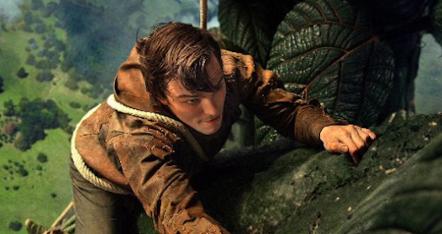
Cast: Nicholas Hoult, Ewan McGregor, Stanley Tucci,
Ian McShane
Directed by Bryan Singer
Running time: 114 mins
"Fee,
Fye, Foe, Fumm. Ask not whence the thunder comes..." isn’t quite how I
recall the line from my childhood and ‘Jack In The Beanstalk’ as it then was.
Then again, Bryan Singer’s "Jack the Giant Slayer" isn’t slow to mess
with my, and many people’s, infant recollections. Ian McShane
Directed by Bryan Singer
Running time: 114 mins
However, the tale itself scrubs up quite well in this latest outing for the big screen, despite being, like hordes of giants themselves — slightly too big, extremely loud and on the wrong side of crude for any smaller seat occupiers at the multiplex.
The adaptation is via a nifty script (by Christopher McQuarrie, among others) which smartly expands the myth, and the direction of the aforesaid Bryan Singer, which adds not only his usual visual flair but a thrilling, swashbuckling pace. Both have collaborated before on "Valkyrie" and "The Usual Suspects," and apart - McQuarrie's "Jack Reacher," Singer's "Superman Returns."
Here, however, they're back back in harness with a boisterous new adventure. Their version of the story gives us an entire race of multi-cultural giants this time, as teenage Jack (Nicholas Hoult) flogs the family horse for a handful of magic beans. Inevitably one of those beans touches water and begins to take root, soaring into the sky and taking Jack up into the clouds towards the land of the tall ogres.
The script ideally sets up the situation and characters with an impressive cast including a English-accented villainous turn by Stanley Tucci. Even better is Ewan McGregor as the dashing soldier who leads the expedition into the giants' lair. McGregor has always had both youthful good lucks and a light touch, and both serve him well in a part that could too easily slip into camp. Singer's direction is lively too, adding visual jokes (there's a quick glimpse of the giants' famous talking harp) and orchestrating some excellent battle scenes. The only real disappointment here is the giants themselves — too obviously computer-generated, to have the feel of almost plausible myth. Additionally the tone of the film wobbles slightly.
Like a lot of recent fantasies such as "Red Riding Hood," "Snow White and the Huntsman," "Hansel and Gretel: Witch Hunters", there are cringeworthy and awkward attempts to target an older audience. Those films over-emphasised the gore and grimy unhappiness; this one drags in some stupid vulgarities and similarly ludicrous 21st century street slang. Truly timeless fantasies — such as Peter Jackson's Tolkien films have shown — don't need those sort of inappropriate embellishments.
There’s a reason that all these stories have been told and retold, endlessly. It is because of the way they tap into eternal fears and allow adults to feel like children again — and they way they then vanquish those fears to allow children to feel, briefly, just slightly more grown up.
POST TENEBRAS LUX
Director:
Carlos Reygadas
Cast:
Adolfo Jiménez Castro, Nathalia Acevedo
Running
time: 120 min.
This film will almost certainly prove to be an impossible difficulty for many in any cinema audience to fully discern or unravel – as it is so full of quite desperate, ambiguous and intangible ideas.
If director Carlos Reygadas had an intention to inform, entertain or educate - then he’s failed on just about every conceivable level, as there’s no inherent message transmitted on the screen and his methods here are disappointingly bereft of anything other than excessive pretension.
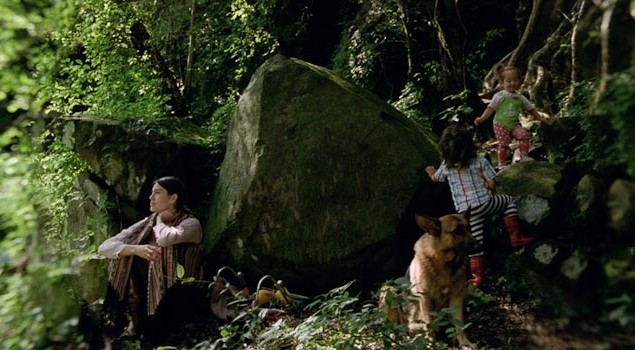
Post Tenebras Lux is certainly haunting and abstract, but it’s a film that yawns at you, and we all know how addictive yawns become. The narrative, if you can even use that word in relation to this, shows how a wealthy family in a deprived area attempt to immerse themselves in internal and external reinvention.
One of the few compelling sequences in a film overburdened with forgettable sections is of the glowing satanic figure who twice creeps into a family's home - a striking but enigmatic image that retains after the whole thing has ended.
While much of Post Tenebras Lux operates at a remote level, the emotional core of the film is remotely unintelligible - and as a whole this clearly experimental film fails miserably.
