Men, Women & Children
Cast: Ansel Elgort, Emma Thompson, Adam Sandler,
Jennifer Garner, Judy Greer, Kaitlyn Dever, Rosemarie Dewitt
Director: Jason Reitman
119 mins
Jennifer Garner, Judy Greer, Kaitlyn Dever, Rosemarie Dewitt
Director: Jason Reitman
119 mins
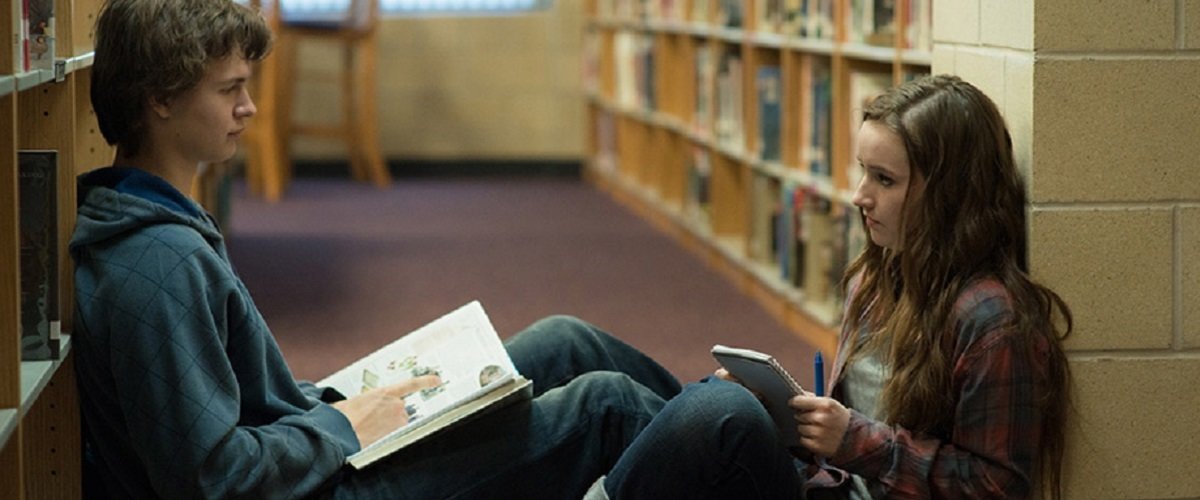
Jason Reitman has directed several interesting and well-developed films in recent years such as Juno, Up In The Air and Labor Day, but here he’s become catastrophically unstuck, with a messy, misjudged ensemble piece with allusions to Tod Solondz. In Men, Women & Children, Jennifer Garner performs like a lump of brittle plywood – as a mother who is so highly-strung she’s apparently ready to snap at the first provocation. Her character, Patricia Beltmeyer, has one child, a thoughtful, sensitive teenager - Brandy (Kaitlyn Dever). Patricia is determined to protect Brandy from whatever predatory forces might slip on to her mobile phone, email, facebook, tumblr, etc. She monitors her daughter’s browser history, her social-media outlets, and her text messages daily and relentlessly, and even leads a support group for parents worried about their children’s online activities. During one such session, a pair of single parents with legitimately troubled teenager offspring — one of whom (Dean Norris who offers the one solitary credible performance in this nonsense) with a gloomy, tedious son who’s escaped into online gaming, the other (Judy Greer) who naively posts saucy, provocative photos of her daughter in an attempt to kick-start an acting career, all share a private laugh about Patricia’s extreme anti-internet dogma.
Reitman offers a comprehensive portrait of his interpretation of how we all live now in the modern world and it’s utterly bereft of anything even remotely interesting. And while there’s no doubt that the online age has profoundly transformed most cultures, adding new dangers and stresses and altering the nature of how we communicate, blind panic is not an especially sophisticated adult response. Hiring dreaded uber-luvvie Emma Thompson to bring her verbal gravitas to the voiceover narration isn’t sophisticated, either, it’s just a pretentious pain in the arse and ears. Nor is opening the film with some guff about Voyager careering through outer space – the tenuous, preposterous relevance is nauseating in its naffness. Politicians can get away with such a boke-inducing combination of self-importance and social alarm, but filmmakers cannot. After that opening —in which Thompson’s narrator sets up NASA’s launching of said Voyager as a metaphor—Reitman settles in on the scunnersome denizens of American suburbia, who are busy sexting themselves into relationship oblivion. With the switch on his back flipped to “dramatic,” the accursed talent-free horror that is Adam Sandler mopes and mumbles his way through a troubled marriage as Don, a man whose computer is so consumed and overrun with porn that he’s taken to masturbating in his son’s room. Just about sums up Sandler’s entire career in a ‘stroke’. As he turns to escort services to bring the real thing back into his life, his bored wife Helen (Rosemarie DeWitt) logs onto Ashley Madison, a site for the married and restless, and their mutual infidelity becomes their only, ironic show of compatibility. Meanwhile, their 15-year-old (Travis Tope) is so into bondage porn and other forms of extreme sex online that he can’t get it up in real life much to the shagless chagrin of his teen conquest.
And guess what? It gets worse. Tim (Ansel Elgort) is so miffed about his mother leaving his dad Kent (Norris) to start a new life with another man that he quits American football and spends sleepless nights fighting virtual battles alongside similar inarticulate pleb losers. There’s also Allison (Elena Kampouris), an insecure girl who so desires the romantic attention of a popular buffoon that she’s starved herself into an eating disorder.
The only relief from all these drifting human myridions of misery come from Greer and Norris who act with warmth, humour and soul. However the entire tornado of tripe that is Men, Women & Children operates under the theory that humanity has now graduated to the filth-laden text bubbles on screen that appear over everyone’s heads, at the expense of more thoughtfully realised characters. It’s a seemingly endless marathon of melancholy, and a complete waste of time, talent and resources.
St. Vincent

Cast: Bill Murray, Jaeden Lieberher,
Melissa McCarthy, Naomi Watts, Chris O'Dowd, Terrence Howard, Dario Barosso,
Kimberly Quinn, Ann Dowd, Donna Mitchell
Director: Theodore Melfi
1hr 43m
Director: Theodore Melfi
1hr 43m
Bill Murray has travelled from Groundhog Day to Ghostbusters, and he’s been Lost in Translation with Broken Flowers somewhere in between….but with this, undoubtedly his finest role to date, St. Vincent, at the time of writing, an Oscar nod might well come his way. A down on his luck drunk, and with an overly mortgaged ramshackle house, a day at the horse races might be the only thing left between the titular Vincent and penury. Until an unlikely occurrence presents itself when his new neighbour (Melissa McCarthy), a recently divorced woman, is blamed for hitting his garden fence with her removal van. She promises to pay him back despite being a single mother with lengthy working hours in a hospital, and in the meantime, Vincent gets stuck babysitting her son, Oliver (Jason Lieberher). But he’s not an especially warm type. Instead, he just sees the babysitting as a way to make a quick $12 an hour to gamble on the gee-gees.
Murray has made a long career out of unpredictable films with unpredictable behaviour. But one thing that’s certain in his 40-plus years on-screen, is his laissez faire attitude which is full-on here. Naomi Watts does a wonderful job playing Vincent’s Russian pregnant girlfriend. Chris O’Dowd rounds out the cast as Oliver’s school teacher in gently amusing turn as Father Geharty who lectures about real life saints. The film isn’t the comedy you might expect by teaming Murray and McCarthy. Rather, a young child learns about life through a curmudgeonly, erascible old man, and he in turn learns from the boy. But it’s also about the life stories kept secret, the secrets of our soul. Even McCarthy (finally) becomes more a realistic human being, performing more than her usual crass ‘fat-bird’ toilet humour gags.
When Bill Murray embarks on a leading role in a film such as this, he overpowers it to the point where you don't really notice a great deal else – however in this excellent feature, happily there are some other fine performances – with a great story and a marvellously witty, sentimental but enormously engaging script.
