Seven Psychopaths
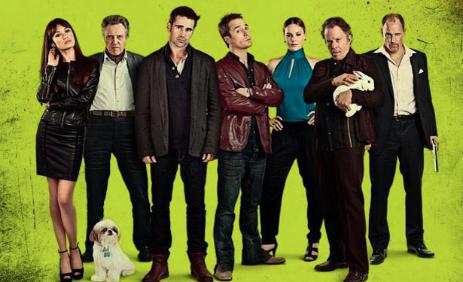
Cast:
Colin Farrell, Christopher Walken, Sam Rockwell, Woody Harrelson, Abbie
Cornish, Tom Waits, Kevin Corrigan, Harry Dean Stanton, Gabourey Sidibe, Olga
Kurylenko
Director:
Martin McDonagh
Running
time: 109 mins
Director Martin McDonagh may not glamorise violence, but it seems to be a vital element for his artistic expression, as in his feature, the sublime In Bruges, which was an existential essay, considerably empowered by highlighting its bullet-points with actual bullets.
His latest, Seven Psychopaths, a gangster buddy-flick that plays out like a Tarantino remix of Adaptation, stars Colin Farrell as Marty, a creatively frustrated heavy-boozing screenwriter whose deranged best friend (Sam Rockwell as Billy) is determined to help his mate write a script called "Seven Psychopaths." Total chaos ensues in this at times cleverly daft romp, which will probably be best remembered for its quotes. Seven Psychopaths is a garishly shot production that's quite elegant in its own extremely seedy way. McDonagh's loyal followers and a top cast of character actors should prove irresistible to those hungry for such stuff, but the film does have quite a few failings along the way, mainly with its fractured eat-itself narrative, which is a dodgy path to embark upon.
The film begins with two hitmen standing under the shadow of the Hollywood sign as they chat about America's history of violence. They face outwards towards the audience, chatting about the particulars of John Dillinger's murder, until a masked killer casually walks up behind them and shoots both in the back of the head. This opening plays like a passing of the torch, a nod to the calculated cool of Pulp Fiction and a rejoinder to the self-control that made that mode of filmmaking possible. It applies this "shoot first, joke later" philosophy, and the biggest challenge that McDonagh faces with his serial killer script is finding a way to keep his characters alive long enough to tell a full story.
As Marty, Colin Farrell (who also starred in In Bruges) is obviously standing in for McDonagh, an amusingly self-flattering piece of casting through which the director promotes his muse into his feature. Nevertheless, Marty isn't defined by the extent to which he reflects his creator, or by his haggard good looks or even by his functioning alcoholism. No, what endears Marty to us is the fact that he's the only sane person in a movie brimming with psychopaths—the film lists seven of them, but introduces us to at least seven more.
It's not especially troubling to learn that Marty's best friend Billy kidnaps dogs for a living, but it's never a good sign when your pal is using Christopher Walken as a foil. Walken—as Hans, his best outing in ages—is the light and soul of a film that's at its best when it exposes a softer side. Hans is a guy with a mysterious past and a cancer-stricken wife, and Walken is sublime, delivering his lines as if every syllable was a soliloquy. When Billy nabs a Shih Tzu belonging to a trigger-happy gangster named Charlie (a nutcase Woody Harrelson), it's Hans who suffers most.
The whole thing hums with a mordant beauty as it brings together all of its motley nutjobs and branches out into extended asides in order to explore the backstory of each psychopath. Each personal history is violently romantic and soaked in revenge, all of them so bleakly comic that by the time Tom Waits appears as a rabbit-cuddling mass-murderer, it just seems par for the course. McDonagh introduces each of his headbangers as he pieces together the various strands of a very loose story.
Rockwell plays well as a terrific sociopath, but Billy's merciless enthusiasm to help Marty with his script is stretched to breaking point when the film relocates to the desert for its comparatively stagnant second half. Billy seems intent on steering the film towards a self-awareness that McDonagh is hesitant to embrace. His script overdoes the relationship between style and violence and ends up not saying much about either. Seven Psychopaths is a film about the creation of a first draft, and it reflects that process in the worst ways—getting to the end is an accomplishment, but getting there well is a whole different story. McDonagh's second feature never finds the mordant beauty of his first—it's neither a biting satire of retribution nor a particularly lucid look at the chaos of the creative process, and it can't figure out a way to be both.
Ultimately somewhere between a mess of a few big laughs and a spraying frenzy of bullet wounds, this film about film-making illustrates what makes them work, but forgets what makes them matter.
I, ANNA
Written and Directed
by Barnaby Southcombe
Based on the novel by Elsa Lewin
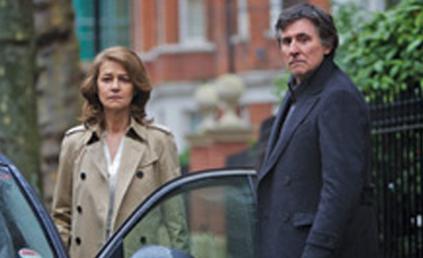
Anna Welles - Charlotte Rampling
DCI Bernie Reid - Gabriel Byrne
DI Kevin Franks - Eddie Marsan
Janet Stone - Jodhi May
George Stone - Ralph Brown
Stevie - Max Deacon
Joan - Honor Blackman
Emmy - Hayley Atwell
Running Time: 91 mins
Based on the novel by Elsa Lewin
Anna Welles - Charlotte Rampling
DCI Bernie Reid - Gabriel Byrne
DI Kevin Franks - Eddie Marsan
Janet Stone - Jodhi May
George Stone - Ralph Brown
Stevie - Max Deacon
Joan - Honor Blackman
Emmy - Hayley Atwell
Running Time: 91 mins
Barnaby Southcombe’s debut I, Anna mixes both style and intuitive writing to make for a thoroughly satisfying crime thriller. The film features the director’s mother, the wonderful Charlotte Rampling and another outstanding veteran actor Gabriel Byrne. Between them, Rampling and Byrne have notched up decades of experience between them – and apart from their vast talents, the pair has proven themselves to be fearless by often taking a gamble with independent films.
She plays Anna Welles, a 60-something divorcee whose lonely existence is momentarily interrupted by visits from her daughter Emmy (Hayley Atwell). When we first see Anna, she’s participating in a speed-dating session, and it’s the cryptic events of that night which is central to a murder mystery that fuels the plot, with detective Bernie Reid (Gabriel Byrne) taking on the case and falling for Anna.
Based on the novel by Elsa Lewin, I, Anna is a film filled with noir conventions that are tinkered with and well played. Rampling makes for a stunning femme fatale even at the age of 66 while also portraying a sympathetic fragility, and Byrne brings a smouldering energy and hound-dog look to his role even though he is playing more of a workaday rozzer than a dogged one. Good too is Southcombe’s use of the London setting, opting for less of a tourist postcard style by going for a colder metropolis, with cinematographer Ben Smithard capturing the greys of drizzly London weather (perfect conditions for such a dark story) and sleek architectural designs of the high rise buildings and bars where it all unfolds.
It’s not often that either lead actor can headline their own film in an industry unkind to those over the age of 60. Nor is it often that either actor would manage to find leading parts in a film as well-written and directed as this in the current stage of their careers.
