Love Is Strange
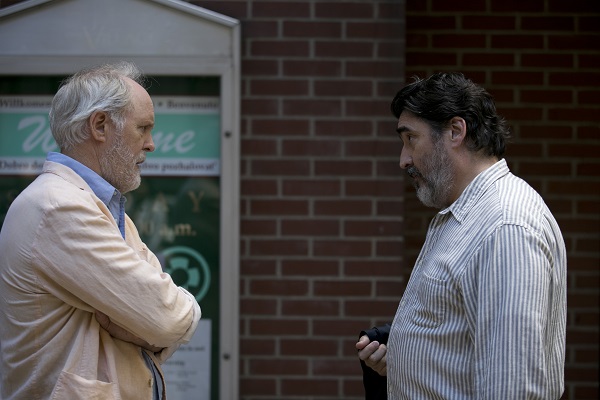
Cast: Alfred Molina, John
Lithgow, Marisa Tomei
Director: Ira Sachs
98 mins
Director: Ira Sachs
98 mins
There’s a great scene in
Ira Sachs’ Love Is Strange, in which Ben (John Lithgow) and George
(Alfred Molina) share a drink at a gay bar in New York City. Ben relates
a powerful story to the barman, in which he and several gay friends marched
into that very same hostelry nearly 40 years previously with press men in tow, and
demanded to be served. It began a revolution and instituted a level of
acceptance never before seen in the gay community. The impressed barman
thanks Ben for his courage and gives them a free round of drinks. Ben and
George, a romantic couple who have been together for that same four-decade
period, look at one another and share a mischievous laugh. George tells
off Ben who was clearly fibbing, “You’ll do anything for a free drink!” This scene masterfully
draws upon the shared experiences—the pain, the joy, the closeted agony—of two
strong men who have preserved their dignity no matter how hard society tried to
strip it from them. There are decades of stories, inside jokes and
meaningful silences between them; more than enough to fill a two hour film and
transport audiences into a world they’ve never experienced before. And
yet, this wonderful scene represents one of only two meaningful
sequences shared by Lithgow and Molina in the entire film; two scenes where
these thoughtful, articulate lovers silence the noise around them and actually speak to one another.
After New York legalises gay marriage, Ben and George rush to take advantage of this. Unfortunately, George, who teaches music at a Roman Catholic school, is immediately dismissed when the archdiocese learns of his marriage. In order to stay rooted in their beloved NYC, the couple must make some hard decisions, including living apart and crashing with family and friends. You will feel deeply for these two lovers who, after finally getting the chance to marry, must now live separately - just to survive. The film does have some admirable qualities, however, including a beautiful Chopin-infused soundtrack. Sachs paints an observant portrait of New York City, which functions as the lover that neither Ben nor George can leave behind. He tries to say something about the challenges of relationships, both hetero and homosexual, as well as some subtle commentary about economic instability in the modern world. In essence though, Lithgow and Molina serve merely as conduits into two forgettable stories that offer only relationship hassles or stale insights into the human condition. In trying to demonstrate that Ben and George are no different than any other couple, the filmmakers have deprived us of their deeper story. It would be delightful to spend a couple of hours with these two soul mates, but, alas, we never get the chance.
After New York legalises gay marriage, Ben and George rush to take advantage of this. Unfortunately, George, who teaches music at a Roman Catholic school, is immediately dismissed when the archdiocese learns of his marriage. In order to stay rooted in their beloved NYC, the couple must make some hard decisions, including living apart and crashing with family and friends. You will feel deeply for these two lovers who, after finally getting the chance to marry, must now live separately - just to survive. The film does have some admirable qualities, however, including a beautiful Chopin-infused soundtrack. Sachs paints an observant portrait of New York City, which functions as the lover that neither Ben nor George can leave behind. He tries to say something about the challenges of relationships, both hetero and homosexual, as well as some subtle commentary about economic instability in the modern world. In essence though, Lithgow and Molina serve merely as conduits into two forgettable stories that offer only relationship hassles or stale insights into the human condition. In trying to demonstrate that Ben and George are no different than any other couple, the filmmakers have deprived us of their deeper story. It would be delightful to spend a couple of hours with these two soul mates, but, alas, we never get the chance.
The Duke of Burgundy
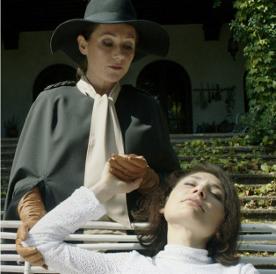
Cast: Chiara D’Anna, Sidse Babett Knudsen
Writer/Director: Peter Strickland
104 mins
While the action does unfold in some indeterminate, central-European locale, there is a relatively contemporary setting. The film (the title is that of a rare species of butterfly) features an all-female cast. Speaking of butterflies, the film does boast an inordinate number of insect aficionados and female entomologists, all associated with a local institute.
One notable exception is Fatma Mohamed, a custom fetish-bed carpenter and “human toilet” consultant. Mohamed infuses her role with the elegant poise of an upper class wardrobe consultant. Insects appear early and often: as the subject of scholarly presentations; in quick-cutting montage sequences between scenes with clunky metaphors and in an unreleased soundtrack of silk-work mating rituals by avant-garde sound ecologist Michael Prime, plus music by Cat’s Eyes further accentuating the sonic dimension of Strickland’s surreal netherworld.
Strickland, who also wrote the screenplay, stated that “it’s never about watching a perfect film; it’s about finding moments.” Regrettably there are next to none in this monotonous, pretentious bilge. When the tedium meter scales 10+ on the eleven-point Spinal Tap scale, Strickland throws in a flourish of bone-dry, subversive parody – followed by more references to mirthless S&M sex play. Finding an audience of knowledgeable cinephiles who might appreciate this feature’s derivative, empty vacuous content won't be easy.
