Cast: Nate Parker, Arnie Hammer, Aja Naomi King, Jackie Earle Haley
Director: Nate Parker
119 mins
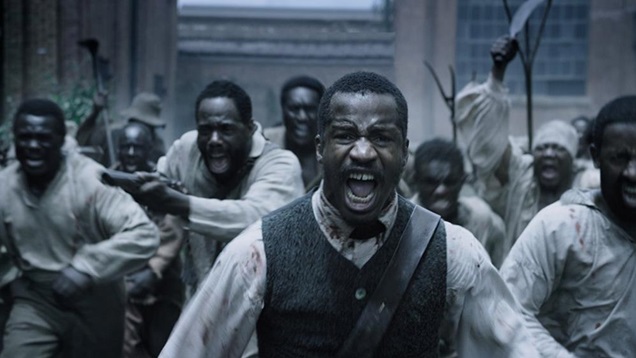
Nate Parker stars in this film – and he also wrote, produced and directed it. Unfortunately, people will enter a cinema to see his film expecting something heady, profound and provocative, perhaps due to the inherent power of the subject matter. However, if like me, the viewers are totally honest with themselves and judge “The Birth Of a Nation” strictly on its inherent artistic qualities, it has to be admitted that the project is dramatically inert and fundamentally little more than an infuriating exercise in an ego running amok. The material takes very powerful source material and reduces it to a reductive, gratuitous revenge drama. The film shows the protagonist Nat Turner - a slave in Virginia who in 1831 led a violent uprising of his fellow slaves in which at least 55 white people—men, women and children—were brutally murdered before he was finally apprehended and hanged for his crimes. Coming at a time when America is facing highly unsettling racial strife, the like of which hasn’t been seen in decades, from unarmed men being shot down with depressing regularity, it certainly is the perfect time to revisit Turner’s story and what it says about where the USA was back then and where it’s heading today.
As the film opens, we are introduced to Nat as a small child who is taken out to the woods to meet some kind of mystical cleric who looks at markings on his chest and immediately declares him to be a prophet to whom everyone will one day listen. Nat lives with his family on a cotton plantation owned by the rich and powerful Turner family, where he has yet to be personally inducted into the horrors of slavery. However, he is not fully isolated against what is going on, and one night, he witnesses his father fighting off a couple of slave hunters and being forced to take off, never to be seen again. Despite his tender years, Nat is already a literate lad and Mrs Turner (Penelope Ann Miller) takes notice and in an altruistic act, brings him into the house to teach him how to read properly from the Bible. When her husband dies, Nat is sent to work in the cotton fields for the first time. Reaching adulthood (and now played by Parker), Nat maintains a certain friendship with Mr Sam Turner (Arnie Hammer) whom he played with when both were youngsters. He persuades him to 'purchase' a woman - Cherry (Aja Naomi King) - to whom he is attracted - when he sees her being sold at a slave auction—and they end up marrying. By now, Sam is short of cash and reluctantly decides to exploit his friend’s gift as a Biblical orator by renting him out to other slave owners to pacify their slaves by preaching how the Bible itself deems slavery a good and righteous thing. As they tour these plantations, we are shown the horrific cruelties inflicted upon the slaves by their masters (including one grisly example of forced feeding) and when Sam’s finances have improved, he resorts to treating his once-childhood friend like a slave – eventually having him suffer a brutal whipping for the crime of baptising a white man on his property. Compounding those horrors, Cherry is violently raped by a group of slave traders and the wife of his friend is also made to act as a sexual slave at Sam’s insistence. Finally pushed over the edge, Nat begins to plot his revolt against his masters.
The film is utterly atrocious and little more than an exercise in showing off
Parker’s considerably dubious abilities on both sides of the camera, than in the
story at hand. While a simple and straightforward depiction of the events might
have had a devastating impact on viewers, Parker seems content with a
ham-fisted screenplay that is unable to professionally deal with the more
truthful and troubling realities - and the scenes of violence that appear to have
been designed to send viewers into a fury of bloodlust, rather than to regard
them with sorrow and revulsion. It is hard to pick which one of these moments annoyed
me the most but showing a final tableau of perfectly arranged lynching victims
dangling from the trees while Billie Holiday’s rendition of “Strange Fruit”
plays on the soundtrack will certainly suffice. “The Birth of a Nation” is an artistic sham, the like of
which the film industry has been churning out for far too long, and which places
grisly violence and even-grislier star turns above everything else. Watching it,
I got the sense that Nate Parker saw the awards and box-office hauls earned by
“12 Years a Slave” and thought “I want some of that.”
