A Most Violent Year
Cast:
Oscar Isaac, Jessica Chastain, Albert Brooks
Written and Directed by J.C. Chandor
125 mins
Written and Directed by J.C. Chandor
125 mins
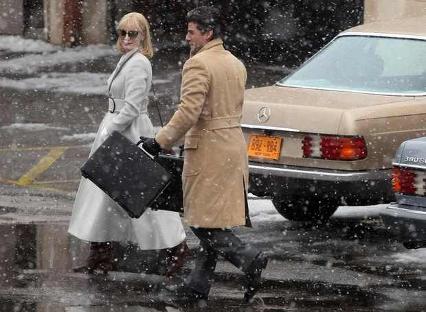
Back in 1981 when Kool and the Gang’s “Celebration” pounded out of ghetto blasters and coffee shops were a relic from the 1950s, most people relied on news from a daily paper and life was less technology-obsessed. “A Most Violent Year” is set at that time in the life of New York, and the struggles of one man in nice clothes and in possession of manners, namely Abel, who prides himself on his honesty, even if, perhaps, it can be as easily slipped on or off as quickly as his camel-hair overcoat.
Filmmaker J.C. Chandor has a love of detail, and just as “Margin Call” delved into finance, and “All Is Lost” explained sailing, “A Most Violent Year” tells us all we ever wanted to know, and quite a deal more, about the oil for heating your home and the cut-throat business dealings in this area. It is an industry run by variously shady people, some with relatives in prison. Even Abel, who uses his honesty as a selling point, is married to a gangster’s daughter — and his constant protests of innocence come with a layer of heavy-coating. Does he behave ethically? “We follow industry standards,” he carefully repeats, when anyone dares to ask. But Abel has been trying to climb to the top of his industry — to close an important new deal, expand into new areas, and be more than just another entrepreneur with 10 trucks and a territory, while the people he’s trying to climb past are determined to pull him back down.
“A Most Violent Year” — which doesn’t really scale the heights of authenticity in visually recreating that era, apart from graffiti-strewn train carriages – is set in two neighbourhoods. The first is that part of the cinema where 1970s classics by Friedkin, Lumet and Coppola thrived; the second is that real-life urban intersection of law, crime and dirty politics, but it’s not quite at home in either.
The charisma-free zone that is Oscar Isaac plays Abel, and the wonderful Jessica Chastain is cast-against-type as his wife and has a very strong scene near the end – but the usually great Albert Brooks is totally wasted in an underwritten role as their lawyer, a part as constrained as his contrived, combed-down grey hair.
The film doesn’t really dig into the messy complications of its subject, where gangsters can become businessmen and then go back to being gangsters, and officials with bigger political ambitions can find it very convenient to look the other way. Chandor’s previous eye for detail fails to fully evoke the grimy era, particularly in the outer-borough locations. In essence “A Most Violent Year” needs to be louder, ruder, and considerably less contained.
The Gambler
Cast: Mark Wahlberg, John Goodman, Jessica Lange
Director: Rupert Wyatt
111 mins
Director: Rupert Wyatt
111 mins
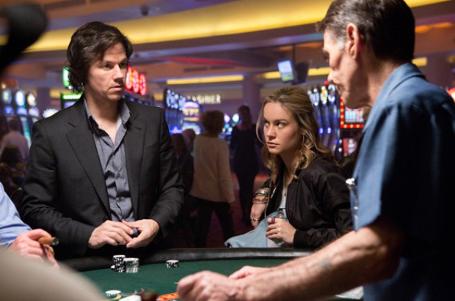
American films from the 1970s had their own distinct, philosophical quality to them, something that inevitably gets lost in translation when the material is put to screen again by a new team of filmmakers as it is here in this remake from Rupert Wyatt. Jim Bennett (Mark Wahlberg) is a gambler. He earns his money as a literature professor, but at the card table is where Jim’s wallet says farewell to sanity. He hits a hot blackjack streak, then proceeds to get up, move it to the roulette table and promptly loses it all. The owner of the casino is forgiving, but $240,000 is too much to overlook. Jim comes from a wealthy background, but a quarter of a million is quite tricky to cough up in a week. Privilege has its benefits though; Jim’s mother Roberta (Jessica Lange) whips out the cheque book to clear that debt, temporarily solving Jim’s problems.
In no time at all he squanders that goodwill and Roberta leaves with the promise that she won’t be there to rescue him again. Quite fittingly described as “the world’s stupidest asshole,” he is less than perturbed it seems by his latest balls-up, as he promptly takes $50K from a loan shark (Michael Kenneth Williams) and uses his newly found stake to lose even more. Quite why he continues down this vicious road isn’t, somewhat perplexingly, explained. Jim doesn’t even get a rush out of the highs that come from gambling; peace only seems to spread across his face when that knockout punch is delivered by the dealer – and it doesn’t end at the table either. An associate professor during office hours, Jim tells his students not to bother taking up writing unless they’re approaching genius – as there’s just too much mediocrity in the world already. Jim doesn’t seem to enjoy anything, other than digging himself out of holes.
Films about drug lords are often heavily criticised for glamorising the lifestyle and ecstasy of the drug trade, but an appeal must be present, otherwise why would anyone do it? There is clearly an unrivaled thrill in beating the odds and being triumphant — if only briefly. Jim looks to lose and nothing more; no satisfaction can be had in being up $2.5 million. In examining the psychology of a gambler, the highs have to be present as well, otherwise audiences can only respond with indifference – and to say there is a half missing here is an understatement. This new Gambler outing is almost entirely a cycle of losing; borrowing from Peter to pay Paul and then losing even more. Making matters more challenging is that Wahlberg’s protagonist makes the viewer inclined to root against him. Despite delivering a colourful stream of obscenities and deliciously relentless cynicism, Wahlberg is lacking in the charm James Caan effortlessly radiated playing the lead in the original version. Kudos though to the script, penned by the magnificent William Monahan, famed for The Departed. His “Fuck You” soliloquy for an effervescent John Goodman’s character Frank is a revelation. However, here in an age where remakes are slicker and the edges are sanded off the characters for mass audience consumption, Wahlberg’s titular performance as The Gambler offers little joy. He tries his best, but his limited acting talent sadly lets him down in a feature with a lead as nihilistic as this.
