Obvious Child
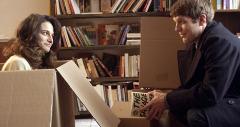
David Cross
Director: Gillian Robespierre
“Obvious Child” is the story of (quite frankly hopeless) stand-up comedienne Donna Stern (Jenny Slate) and her decisions when a one-night stand results in an ill-timed unwanted pregnancy. This began as a short in 2009, and via a surprisingly successful use of crowdfunding, resulted in this feature-length debut for writer-director Gillian Robespierre. There are very few crass jokes “Obvious Child” doesn’t make, but it’s also worth noting that despite its attempt at fearlessness and a pretend bravado this really is a shocker. Other reviewers may disagree perhaps due to the sensitivity of its subject matter, but that doesn’t detract from the fact that this is a mediocre film, in many respects. Slate’s Donna is grotesquely unprepared for adult life: she’s about to lose her job at a used book shop, her boyfriend has dumped her for making jokes about their relationship in her act, her mother (sorry U.S. readers, ‘mom’) and dad wonder when she’ll get her life together, and there’s a very real sense that the title refers to her clearly evident lack of maturity. Or maybe the makers are just unimaginative losers who like Paul Simon and thought they could wrap a film around the title of one of his songs. Or maybe her future belly-bump is the clue? So. Anyway. Donna’s one-night stand with bland-guy Max (Jake Lacy) has left her pregnant so off she goes to ‘Planned Parenthood’ so that she can learn how to deal with her unplanned event.
In film, breaking taboos is easy; the question is what you make out of the pieces you’re left with. Slate never has an actorly monologue about her predicament, just a series of puerile on-stage laugh-so-you-don’t-cry wisecracks and when she goes to the clinic, she’s never confronted by shrieking anti-abortion activists. And yet when Donna is lying sedated on an operating table and gravity sends tears down her cheeks towards the clinical cold tile floor, you can tell that her decision may be decisive, but it isn’t unfelt. Jake Lacy’s Max is an entirely decent human —made up of relaxed charm and understandable reactions—and there are nice supporting moments from Gaby Hoffmann as her best friend, Richard Kind as Donna’s dad, Polly Draper as her female parent and David Cross as a gay self-loathing/self-loving stand-up. However this piece of work is glib, monotone and in real need of more subtle maturity on the part of its characters and creators.
A Dame To Kill For
Director: Robert Rodriguez
When Robert Rodriguez’s original "Sin City" was released in 2005, the heavy neo-noir felt genuinely groundbreaking —a comic book adaptation so faithful to the source material and its striking visuals that the comic's creator Frank Miller received a co-directing credit. Rodriguez and Miller didn't so much translate sequences as much as they cut and pasted arresting tableaux straight from the graphic novel. The dialogue encompassed the same hard-boiled monologues and staccato delivery; only word bubbles were missing. But as stringently loyal as it was, the film was outstanding visually, like nothing seen before on screen.
Nearly ten years on, Rodriguez and Miller revisit the rain-slicked, blood-soaked streets of (Ba)sin City. But instead of taking another bold leap forward, "Sin City: A Dame to Kill For" pretty much maintains the status quo. Stylistically and tonally, the "Sin City" franchise hasn’t evolved. Instead of the cold open that started the first film, with a character almost wholly unrelated to the rest of the narrative, "Sin City: A Dame to Kill For" begins with the first film's main character —as the hulking brute Marv (Mickey Rourke) hunts a pack of young hoodlums who enjoy setting homeless men on fire, and he also suffers from amnesia. This sequence establishes the puzzle-piece nature of the sequel's timeline with events taking place before and after the chronology of the relatively straightforward first film. The scene also introduces the primary visual draw of 'A Dame to Kill For' —an eye-popping use of 3D. As Marv goes through the windshield of a speeding car, glittery shards of glass attack the screen. From there, "Sin City: A Dame to Kill For" pretty much follows the format of the first film to the letter. It's comprised of a series of loosely connected vignettes that all take place in the same hyper-stylised film noir metropolis.
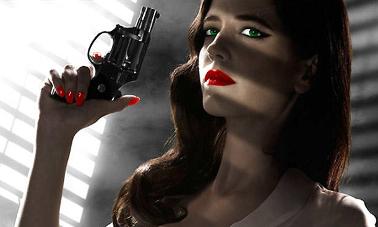
The main storyline, "A Dame to Kill For," features a very different version of the Dwight character played by Clive Owen in the first film. Still a two-bit criminal who runs foul of some very nasty characters, this time he’s played by Josh Brolin. The first film mentioned in passing that Dwight had “changed his face” but that’s all the justification you’ll find. Dwight finds himself entangled with Eva Lord (Eva Green), the smoking hot wife of a corrupt billionaire, who reaches out to him for help. She turns out to be an archetypal femme fatale, exploiting poor Dwight. Eventually Dwight and Marv team up to put the hurt on Eva and her massive bodyguard Manute (Dennis Haysbert, taking over from the late Michael Clarke Duncan). It’s here that the film demonstrates a delightfully perverse kick, mostly down to Green's slinky and silky scene-stealing performance.
Two Days One Night
(Deux Jours, Une Nuit)
Directed by Jean-Pierre & Luc Dardenne
Marion
Cotillard's startling beauty makes her look unlike anyone else, and yet she
never quite resembles herself on screen: it's a face that can turn from silken
to sallow, hunter to hunted, goddess to lowlife. She has in essence the perfect
actress' face. Luc and Jean-Pierre Dardenne, have turned to her to
headline their very first star vehicle. Cotillard's singular radiance, however,
makes her the ideal lead for the Dardennes' latest hard-luck piece "Two
Days, One Night" -- in which a woman's personal charisma is the only thing
keeping her from the breadline.
If "Two Days, One Night," for all its
typically sweet and hard virtues, feels uncharacteristically contrived for a
Dardennes joint, its leading lady cannot be held to blame. Cotillard sells
every sweat-stained note of Sandra, a careworn working-class mother of two in
the Belgian industrial town of Seraing -- crucially never playing it as a guise
that needs selling in the first place. There's no ostentatious un-gamourising
stuff here, no crumpled teeth or effortfully distressed hair. Clad in clean,
sorbet-bright tank tops, the distinct tremor in her voice intact and
unaccented, Cotillard instead gets to work on Sandra's long-brewing inner
exhaustion and (as we soon learn) her diagnosed depression, achieving each
insecure or irritable tic with unshowy exactitude. It's with slack defeat that
she receives the latest bad news: her job at a solar-panel factory has
fallen prey to down-sizing. Following a poll of her 16 co-workers, who are
asked to choose between her retaining her job or their €1000 bonuses,
self-interest carries the day - with only two people taking her side. After
learning that her manager unduly influenced the vote, it's all Sandra and one
of her sympathisers can do to a secure a second secret ballot the following
Monday -- giving her the weekend to personally visit the 14 in the hope of talking
them round. It's a tight, urgent premise, crisp and clean and entails a
degree of narrative construction. Every face-off between Sandra and a wary
colleague is its own tense individual drama of negotiation and resistance, each
one culminating in a mini-climax that either mildly releases or further applies
the pressure on her skinny shoulders; there may as well be an on-screen
scoreboard to keep count of the contrite yeses and stubborn nos as they
accumulate. The skills of social observation are also well-served by the
door-to-door structure, as the Dardennes subtly delineate the significant range
of home environments - differing according to class, race and any number of
personal variables.
It's Cotillard's unwavering conviction, and her just-right
relationship with warmly empathetic on-screen husband Fabrizio Rongione, that
holds our heart through the film's least credible spells. Thanks to her, the
film earns a niftily reversed ending that counts as a gut-punch and an
air-punch at the same time.
Lucy
Director: Luc Besson
“Lucy” is quite a concept with an ambitious scope but a total disaster of narrative structure. What would happen if we were to access all of our cerebral potential, instead of the 10% we actually utilise? According to cinema upstart Luc Besson - it would lead to wondrous speculations on the nature of humanity and the nature of reality for dessert, so that’s what he dishes up on screen here. He’s also given us a stuttering style and a thudding, clunky exposition.
The script is stuffed with references to great ideas in science, including the inclusion of not only Lucy (Scarlett Johasson), but Lucy the pre-homonid mother of us all, so monikered because The Beatle’s “Lucy In The Sky With Diamonds” was playing when her remains were discovered (oh Luc, stop it, you rascal). However gold star in the jotter for introducing natural history, anthropology, neuroscience, and the philosophy of all those things and more into a mainstream action film, but the cross-cutting that plagues the first section, coupled with a plot that becomes more and more an afterthought - the car chases, and the special effects, make this more frustrating than intellectually engaging.
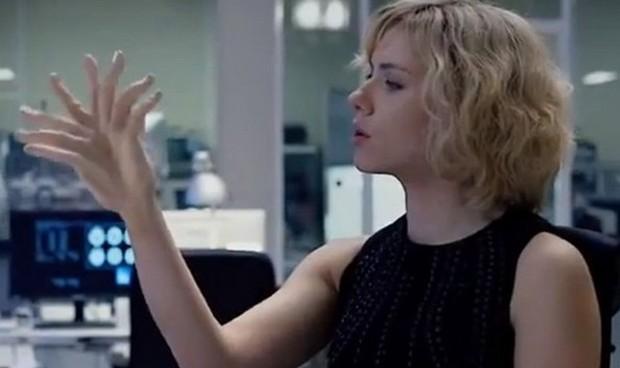
Lucy, the Scarlett Johansson version, is a hard-partying student in Taipei (I know, why?) who is smart enough to know that there is something not quite right about her boyfriend asking her to hand in a dodgy looking steel briefcase to a ritzy hotel. She’s not, alas, smart enough to avoid the trap that she sensed was about to be sprung. In case you don’t get the message that there is something not quite right, Besson intercuts a scene of a mouse about to meet it’s fate at the spring-loaded release of a mousetrap. Lucy’s subsequent ordeal is intercut with scenes of a cheetah stalking and taking down an wild goat. Meanwhile, on the other side of the world, Morgan Freeman is delivering a lecture on how little of our brain we use by way of explaining to the thickos in the cinema audience what’s about to happen to Lucy, and his lecture is intercut with scenes of wildlife gaining carnal knowledge of each other, the anatomy of the dolphin, and other assorted bits and pieces of what look like industrial films extolling the wonders of modern life. This is perhaps meant to be ironic, because once Lucy’s brain is activated and zooming to 100% usage, her comments about what we’ve done with a billion years of life are not all that encouraging.
“Lucy” has some nifty ideas floating through it, and some equally nifty special effects as well. A film that takes on life, death, and the limits of perception imposed by our meagre instruments of perception has merit. But it needs a more intellectual writer and helmer than what’s offered here. Sorry, Luc, old son.
