Written and Directed by Jon Stewart
Jon Stewart makes his directorial film debut with 'Rosewater', the dramatisation of a story that might never have existed if not for his own popular satirical USA television programme “The Daily Show with Jon Stewart.” The protagonist Maziar Bahari, an Iranian-Canadian journalist, finds himself on the receiving end of a different joke when the Iranian authorities fail to see the humour in an interview segment the Newsweek reporter (he) does for “The Daily Show” with a comedian posing as an American spy interested in the Iranian election which Bahari is covering. Something is lost in translation over the airwaves and the authorities presume that Baharo is himself a spy and an agent of the revolt spiralling out of control following the dubious election results that retain power for Iranian dictator Mahmoud Ahmadinejad.
Stewart confidently makes his move on to the helmer’s chair by taking a bold turn with his choice of material. Those who have seen "The Daily Show" will be aware of how news can be treated satirically but Rosewater tackles the political elements of “The Daily Show” with an understated eye for the absurdity of Bahari’s incarceration. Stewart challenges the authority of Bahari’s captors and their government with extremely subtle nuggets of humour. The feature stands firmly behind Bahari and champions those who use the media to interrogate, provoke, and inspire.“You have a real weapon and you choose not to use it,” says one of Bahari’s colleagues when their pursuit of history in the making fails to inspire Bahari to harness the power that he wields in his hands. Bahari instantly has an awakening and he takes the advice of his friend who, sadly, will soon join him in prison. Bahari, as played by Gael García Bernal, undergoes a true growth as he becomes more than a mere observer with his camera and evolves into an agent for change.
Rosewater intuitively mixes the footage of Bahari’s camera—shaky, lo-res footage—as Stewart intersperses forms and film stock to give the film a docu-drama hybridity. The perceptual realism of the footage embeds Bahari’s story within the larger context of Ahmadinejad’s regime by drawing attention to the outcry surrounding the 2009 election even if the film itself doesn’t have time to encompass a larger political canvas. The collage of drama and actualité, however, situates Rosewater within the larger context of the frontline journalists who risk their lives to expose the truth. The film champions the ground-level work of ordinary people fighting for change.
Stewart releases a great deal of clout with this pro-democratic dramatisation of citizen journalism. Rosewater focuses in on the period when Bahari endured captivity and spent 118 days in prison answering questions under duress from an aggressive interrogator (a superb performance from Kim Bodnia) who perfumes himself with the titular holy rosewater to mask his fear from his captors. Rosewater expertly captures the monotony of such a long stretch of isolation—as Bahari answers ludicrous questions in dire circumstances. Stewart, however, disrupts the banality of Bahari’s incarceration by introducing fits of madness in which the journalist gains strength by visiting with deceased family members who also endured torture and faced execution for their political beliefs. Pantomimed dance sequences to Leonard Cohen and titillating false testimonies turn the tables on the captors with subversive strokes of comedy.García Bernal, arguably Mexico’s premier film actor, convincingly plays the Iranian-Canadian Bahari despite the variance in origins and he generally avoids the cross-cultural awkwardness since he jives well with the humour of Stewart’s direction and emphasises the humanism of Bahari’s story through his spirit. The film gains additional global scope and resonance thanks to an effective supporting performance by Shohreh Aghdashloo as Bahari’s mother and pepperings of popular culture that waft into the prison like the sunlight that gives Bahari life. Stewart has a weapon in his hands and he clearly knows how to use it. This politically engaged and shrewdly satirical debut by Stewart shows immense promise and is an exceptionally well-crafted work.
Cast: Tom Hardy, Charlize Theron, Nicholas Hoult, Hugh Keays-Byrne, Nathan Jones, Josh Helman, Rosie Huntington-Whiteley, Riley Keough, Zoë Kravitz, Abbey Lee, Courtney Eaton
Directed by: George Miller
120 mins
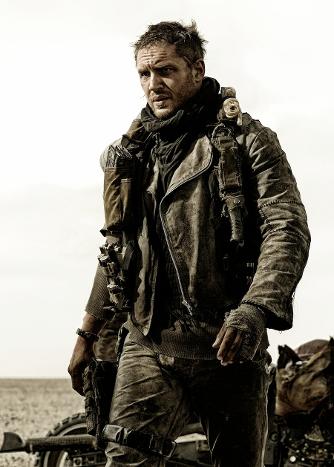
Writer/director George Miller returns from his sabbatical from the previous Mad Max trilogy, and continues in a similar vein, with his perception of a post-apocalyptic world in Mad Max: Fury Road. A desert world, where people bleed for water and petrol as the new titular hero of Max Rockatansky is this time portrayed by Tom Hardy – heading relentlessly on a collision course with Imperator Furiosa (Charlize Theron), a one-handed rebel on the run, but in control of a beautiful and precious cargo. For years, Furiosa has been at the beck and call of the monstrous tyrannical cult leader Immortan Joe (Hugh Keays-Byrne), but the time arrives when she’s able to make her escape, along with the imprisoned prized “breeders” (Rosie Huntington-Whiteley, Zoe Kravitz, Riley Keough, Megan Gale, Abbey Lee). Max is also on the run, so somewhat inevitably, he teams up with the femme fatales as they seek out the promised land of The Green Place. However, angry Joe is in hot pursuit, replete with his own live prog-rock soundtrack, via a demon lead guitarist and several crazed percussionists – and what follows is a wild and savage voyage across a dramatic and spectacular sandscape.
Mad Max: Fury Road is to all intents and purposes a chase film and the energy levels never dip throughout its running time. Miller packs the film with some staggering if ridiculous explosives-filled sequences, all the while maintaining a gripping, dense atmosphere.
Tom Hardy doesn’t really stretch his thespian muscles to any great degree as Max Rockatansky, but maintains a stronger, more stoic side than previous encumbent Mel Gibson managed. The role of Furiosa is fuelled by Charlize Theron and she provides real and much-needed depth to her powerful performance. Nicholas Hoult is excellent as Nux, playing his part to full emotional effect. And even though they’re all huddled together for the entire film and can’t act for toffee, George Miller does give Rosie Huntington-Whiteley, Zoe Kravitz, Riley Keough, Megan Gale, and Abbey Lee’s characters each moderately individual personalities and places in the story.Mad Max: Fury Road is certainly entertaining enough and entirely accessible to those who have never even heard of the Mel Gibson-starring films. It’s all abject nonsense of course, but well worth seeing.
