THE MAN FROM U.N.C.L.E.
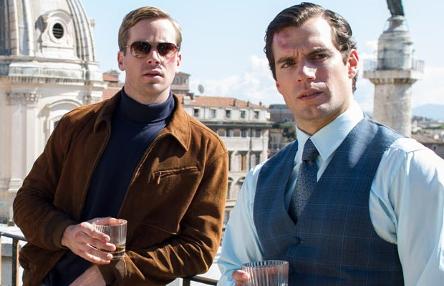
Cast: Henry
Cavill, Alicia Vikander, Armie Hammer, Hugh Grant, Elizabeth Debicki
Director: Guy Ritchie
1.56
Director: Guy Ritchie
1.56
I suppose there is nothing inherently incorrect about revamping the enjoyable 1960s spy series The Man from U.N.C.L.E as a retro-revisitation, with the two protagonist ambiguously gay agents, one Russian and the other American. However, in the gimmicky gloved paws of Guy Ritchie, it’s quickly apparent that he simply doesn’t have the finesse of touch in this hopelessly miscast, comedically wafer-thin spy caper. The whole film is overburdened with a range of ‘never-quite-made-the-grade’ second or third (rate) casting choices - from Henry Cavill (let’s face it, a rubbish Superman) to Arnie Hammer (a dead loss as The Lone Ranger). Even the usually excellent Alicia Vikander (Ex Machina/Testament of Youth) shows zero flair for comedy as the love interest, and absolutely no credibility as a toughie. No expense was spent on the villains either, leaving a yawning gap in this slow-footed, dim-witted, under-written attempted romp through 1960s spy games.
Cavill attempts suave knowing charm as an American thief turned spy Napoleon Solo, who is forced to team up with a Soviet counterpart, Ilya Kuryakin, to foil some ex-Nazis trying to get their hands on a nuclear bomb. Solo must help the daughter of a scientist (Vikander) escape from East Berlin, with help from Kuryakin. It’s 1963, post-Cuban missile crisis, a time of big hats and trench coats from the Soviet Bloc. Kuryakin is forced to pose as Gaby, the girl’s fiance, and defer his mad dog fighting skills. Or, with Ritchie’s naff, appalling script - “skeels.” He also, believe me, actually utters in a faux-foreign purr “Thees ees not the Russian way,” as he tries to convince the baddies that he is just an architect. Solo is nicknamed “Cowboy,” by his eastern buddy, but his lines are limited to weak bursts of tiresome sexual innuendo.
A torture scene works reasonably well, as does an all-too-brief cameo from Hugh Grant, but Ritchie tries to cover the dead spots by filling the soundtrack with obscure ’60s Europop and his continually narrow field of view in the director’s chair is exacerbated by his poor casting. The whole endeavour is just simply dull and ill-conceived and certainly does not beckon in a new franchise.
Gemma Bovery
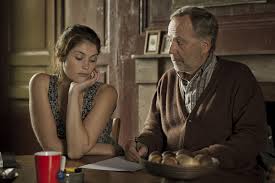
Cast: Fabrice
Luchini, Gemma Arterton, Jason Flemyng, Isabelle Candelier, Niels Schneider,
Mel Raido, Elsa Zylberstein, Pip Torrens, Kacey Mottet-Klein and Edith Scob
Director: Anne Fontaine
Director: Anne Fontaine
“Tamara Drewe,” Posy Simmonds’ lighthearted take on Thomas Hardy’s “Far from the Madding Crowd,” was very ably and amusingly brought to the screen by Stephen Frears but didn't quite come off for many. The same fate will probably befall Simmonds’ look at Flaubert’s “Madame Bovary,” although this has been delightfully adapted by director Anne Fontaine and her co-writer Pascal Bonitzer. It also features one particularly splendid performance.
Not by Gemma Arterton (also the star of “Drewe”), who is nevertheless excellent as Gemma, a British woman who comes to live in a small town in present-day Normandy. Neither is it Jason Flemyng, who plays her humdrum furniture-restorer husband Charlie Bovery. It isn't Neils Schneider, who plays Herve de Bressigny, the handsome younger flame with whom she has some passionate trysts. They’re really second fiddle to the character of Simmonds’ own creation - local baker and Flaubert fan Martin Joubert (Fabrice Luchini), the Boverys’ neighbour, who’s not only struck by the similarity in names, but becomes convinced that it’s somehow his obsession with the book that causes actual events to mimick those of the novel—something he regards with both fascination and horror. Essentially an observer, Joubert drives the entire film of “Gemma Bovery,” and Luchini, who played another character who became enmeshed in tragedy while intruding on relationships from the outside in Francois Ozon’s “In the House” gives a performance of moody stares, nervous glances and stunned reactions that tell you everything about his feelings even before his narration kicks in. He turns us into voyeurs and since Luchini is so adept an actor, he actually controls to some extent how we react to the events on screen.
His refuge, it appears, is literature, and especially Flaubert’s masterpiece, and when Gemma and Charlie arrive on the scene, it seems like an act of God, or perhaps God’s opposite. From the very beginning we can guess what the Gemma’s fate will be. But those who are familiar with the novel will certainly get more enjoyment from the film than those who aren’t. They’re also likely to find it preferable to most of the straight adaptations of “Madame Bovary” that have proliferated over the years, which have included valiant attempts from such illustrious directors as Jean Renoir, Vincente Minnelli and Claude Chabrol. This one certainly has lovely locations and sharp cinematography by Christophe Beaucarne. It also boasts a clever final joke. But its ace in the hole is Luchini.
